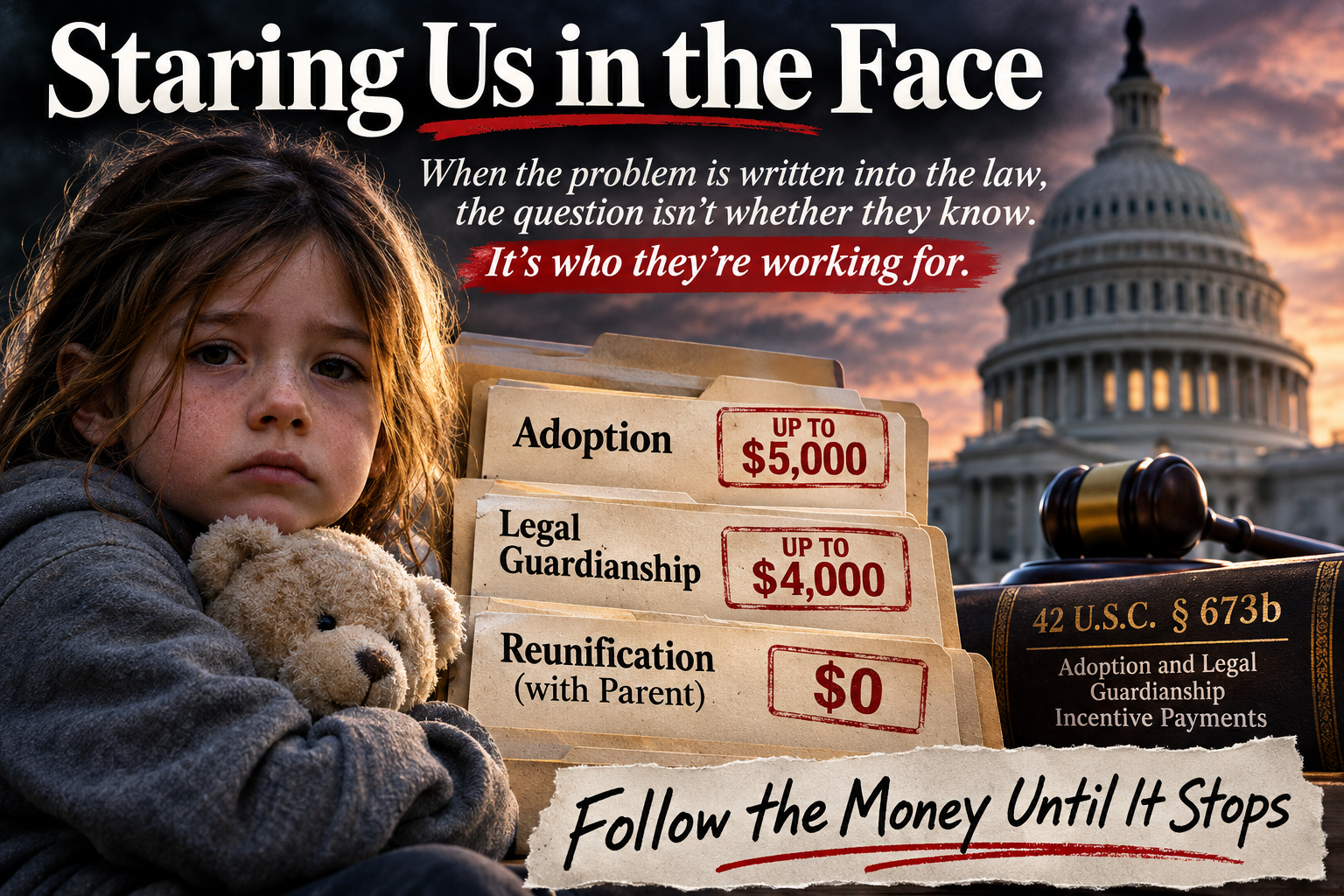
When the problem is written into the law, the question isn't whether they know. It's who they're working for.
By Vincent Cordova••Cordova 2028: Moving Forward Together
Campaign design team
Nobody can say they didn't know.
That's the first thing I want you to understand about the Public Issue Map we put up. Nothing on it is hidden. Nothing on it takes a whistleblower or a leaked memo to find. It's 50 states, 51 issue records and 7,226 districts, all in one public view, with the names of the offices responsible listed right next to the problems they're responsible for.
50
states
51
issue records
7,226
districts
Housing. Healthcare access. Cost of living. Infrastructure. Climate and disaster resilience. Addiction and mental health. Rural decline. Same list, state after state, district after district, year after year.
HousingHealthcare accessCost of livingInfrastructureClimate and disaster resilienceAddiction and mental healthRural decline
The issues are staring us in the face. The people we elected to fix them are staring right back, and they aren't moving.
So I'm going to ask the question nobody in power wants asked out loud:
If they can see it, and they don't correct it, who are they representing?
Follow the money until it stops
I'm going to start with one part of the map, because it shows exactly how this works. It's not the loudest issue in American politics. It's one of the quietest, and that's why it matters.
It's the foster care system.
Here's how the federal government pays states when children leave foster care. This isn't my opinion. It's federal law, 42 U.S.C. § 673b, the Adoption and Legal Guardianship Incentive Payments program:
Adoption
per child for every adoption above the state’s baseline rate.
Up to$5,000
Legal guardianship
(often a grandparent, aunt or uncle stepping in)
Up to$4,000
Bringing a child safely home to their own parent
$0
42 U.S.C. § 673b
Adoption and Legal Guardianship Incentive Payments
Read that again. Under this program, the outcome most families pray for, getting back together, is worth nothing.
The same pattern runs through the rest of the law.
Entitlement
Adoption assistance
Every state
Optional
Kinship guardianship assistance
States must opt in
Adoption assistance is a federal entitlement in every state. Kinship guardianship assistance is optional. States have to opt in to the Guardianship Assistance Program created in 2008, and it comes with extra conditions. So a grandmother who wants to raise her grandchild without legally erasing her own son or daughter can find the money only flows if she adopts. To afford to care for the child, she has to cut the parent out of the child's life on paper.
The federal clock
42 U.S.C. 675(5)(E)
15 of the last 22 months
The federal clock is shorter than recovery. Under the Adoption and Safe Families Act of 1997, states must file to terminate parental rights once a child has been in foster care for 15 of the last 22 months, unless an exception applies (42 U.S.C. 675(5)(E)). Fifteen months. Anyone who has watched someone they love fight addiction knows recovery doesn't run on a federal calendar. A mother can be doing everything right in treatment and still run out of time.
None of this is a malfunction. It's the design working as it was written.
When you pay more for one outcome, you get more of that outcome. Agencies drift toward it. Courts drift toward it. Caseworkers under pressure drift toward it. The child's own family becomes the obstacle instead of the answer.
So who is this system representing? Not the child, and not the grandmother. It represents the metric: the number that gets reported upward, the bonus that gets earned and the case file that gets closed.
What it looks like on the ground
VerifiedReported
The federal incentives above are verified against law and federal data. What follows is reported. These accounts come from families in Washoe County, Nevada, and we're still fact-checking them. I'm telling you that up front because I'm not going to do to anyone else what this system does to families: decide the story before the facts are in.
But listen to what's being reported, and then tell me it doesn't sound exactly like what those incentives would produce:
Reported
A grandmother denied placement over a closed report and a misdemeanor roughly 19 years old. The same agency had approved a placement it knew had no food in the house.
Reported
A family whose written requests went unanswered. The agency then pulled a three-year-old out of daycare and placed her with strangers, an "emergency" created by the agency’s own delay.
Reported
A grandmother seeking guardianship whose court allegedly brought up the $600-a-month adoption subsidy three times and authorized a search for adoptive strangers while she stood there willing to raise the child.
Reported
Relatives promised post-adoption visitation that was never filed with the decree. When they went to court to enforce it, they were told they had no standing, and contact was cut off.
Reported
A caregiver allegedly told by a caseworker not to share an appointment, a mother given 20 minutes’ notice, and then "missed appointments" reported to the court as the parent’s failure.
Reported
Families never told that "safety plans" are voluntary, which lets an agency control where a child lives without ever going before a judge.
Each of these is one family. Taken together, it's a pattern, and the pattern matches the money.
The structure protects it
Why isn't it corrected?
This is the part that should make every American angry, whatever party you belong to. Nobody is confused about these problems. They persist because the structure protects them. Here's how.
1
Responsibility is spread so thin nobody holds it.
Look at who’s named on just the foster care records: the U.S. Congress, HHS’s Administration for Children and Families, state child welfare agencies, dependency courts, the Nevada Legislature, Washoe County Human Services, the Second Judicial District Court and the county DA’s child welfare unit. That’s eight layers. Every one of them can point at another one. When everybody is partly responsible, nobody is accountable.
2
The people being harmed don’t have a lobby.
A grandmother in Reno does not have a PAC. A mother in her ninth month of treatment does not have a lobbyist on K Street. A three-year-old doesn’t vote. The people who benefit from the system as it is (the agencies hitting their numbers and the institutions earning their per-case revenue) are organized, funded and in the room. The people paying the price are not.
3
It’s working exactly as designed.
You don't fix what isn't broken for you. If the incentive rewards the outcome, then from inside the system the outcome is a success. The harm is real, but it lands on families, and families aren't the ones writing the performance reviews.
4
Silence is cheaper than repair.
Fixing this means admitting it. Admitting it means liability, hearings, headlines and maybe the end of careers. Ignoring it costs the people in power nothing. It costs families everything, and families are the ones who’ve been left without a voice.
That is extraction. It's the same machine I've been describing across this entire campaign, just in a quieter room. It's a system built to serve the few at the expense of the many, re-engineered into whatever container keeps it legal. Here, the container is a child welfare funding formula.
It's not just foster care
I led with foster care because it's the clearest case. Open the map to your own state and you'll find the same question waiting for you.
California: housing affordability, homelessness, wildfire and insurance, cost of living and water. Every one of them has been named in every election cycle I can remember.
Mississippi: deep poverty, healthcare access and water and sewer infrastructure. This is the United States of America in the 21st century, and people are still waiting on clean water.
Kentucky and West Virginia: coal transition, addiction, rural health and poverty. Whole communities were promised a future and handed a pill bottle.
Florida and Louisiana: an insurance crisis on top of hurricanes and flooding. Families pay more every year for protection that disappears the moment they need it.
One island town
12 root problems
Sitka, Alaska: we drilled all the way down to one island town and found 12 root problems. Housing, childcare, materials, freight, utilities, healthcare and transportation all cost more because the community is remote, short on land and dependent on outside supply chains. Calling it "housing" doesn't capture it. It's island affordability. Everything is connected, and everything costs more.
Next to every state, the map lists who's responsible: the governor and agencies, the U.S. House and Senate delegation, and the state senate and lower chamber. The names are right there. So is the problem. What's missing is the will to correct it.
What we're doing about it
I'm not putting up a map to make anyone feel bad. I'm putting it up so no one can hide.
Every record on the Issue Map follows the same structure, because that's how accountability works:
1
The incentive.
What is the system actually being paid or rewarded to do?
2
The harm.
Who gets hurt when it does that?
3
The responsible bodies.
Whose desk does this land on, by name?
4
The fix.
What specifically changes it?
We label every record Verified or Reported, so you can see exactly what's been checked against law and data and what's still being confirmed. We show our work, because we're asking the people in power to show theirs.
For foster care, the fixes aren't complicated:
✓
Pay reunification and guardianship at least as much as adoption. Count a child safely back home as a success.
✓
Fund family preservation as an entitlement, the same way adoption assistance is.
✓
Make kinship guardianship assistance mandatory at the adoption rate, in every state.
✓
Make the exceptions to the 15-month clock the default for relative placements and parents in active treatment, and require courts to state on the record why guardianship won’t work.
✓
Use kin-specific licensing standards based on current safety, not a 19-year-old misdemeanor, with written denial reasons and fast appeals.
✓
Give plain-language written notice that safety plans are voluntary, along with the right to counsel and court review for any plan that runs more than a few weeks.
✓
Make post-adoption contact agreements part of the decree, with standing for the relatives named in them.
✓
Deliver case reports at least five days before a hearing, give families the right to file written corrections and keep timestamped notice logs.
None of these fixes is radical. They're what any system would do if it were actually representing the people it claims to serve.
Your turn
Go to cordova2028.com/issues. Find your state and your district. Read the root issues, then read the names listed beside them.
Then ask them the question. Call, write and show up:
"You can see this. It's been in front of you for years. Who are you representing by not fixing it?"
If your story isn't on the map yet, add it. There's a link on the page to share your story. The map gets stronger every time someone who's been told to stay quiet decides not to.
The issues are staring us in the face. It's time we stared back and refused to look away.
I am a piece of the collective essence of this world that never gives up and needs every other piece to be whole.