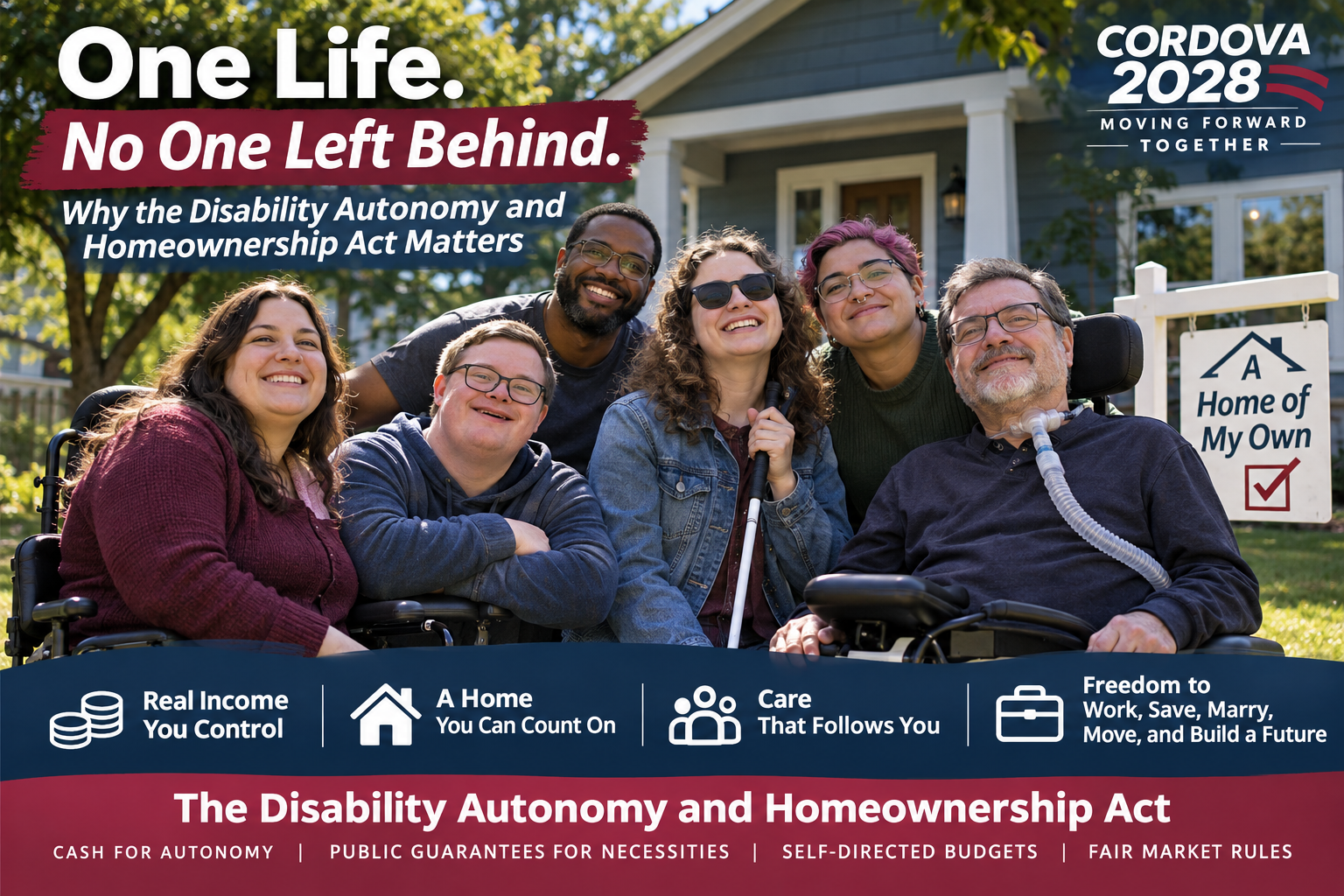
Each of us gets one life.
There’s no practice round, and nobody gets a second try at their twenties or their forties. Every year someone spends trapped in a system that holds them back is a year they don’t get back.
Right now, millions of Americans with disabilities are living their one life inside rules that were built to keep them small. Small savings. Small homes, when they have a home at all. Small choices about who helps them, where they live, and whether they can marry the person they love.
We are going to change that, and we are going to do it together.
That’s why I released the Disability Autonomy and Homeownership Act as a public discussion draft. Here’s why it matters, what it does, and why the road we’re on now can’t continue.
The current trajectory is unsustainable
Look at the numbers we’ve accepted as normal.
$994
The most SSI pays one person per month in 2026
$2,000
The savings limit, set in 1989 and never indexed to inflation
$1,491
What a married couple on SSI gets: about $500 less than two singles
In 2026 the maximum federal SSI payment is $994 a month for one person. That is the most you can get, and the average check is lower still. (AARP, Disability Secrets)
On that income, the law says you can’t hold more than $2,000 in savings. That limit was set in 1989 and has never been adjusted for inflation. $2,000 in 1989 is worth more than $5,000 today. Congress never voted to cut it. It just let inflation eat it year after year, and called that stability. (Justice in Aging)
The income rules are older still. The basic earned-income disregard has stayed at the same level since SSI started in 1974. (CBPP)
Then there’s marriage. Two people on SSI who marry get $1,491 a month as a couple, which is about $500 less than they’d get as two single people. The couple’s asset limit is $3,000, not $4,000. So the system tells disabled Americans that loving someone will cost them. (AARP)
Stack it all up and you get this: