Campaign design team
We Hold the Key: The People's Authority and the Constitutional Right to Demand Change
By Vincent Cordova · Candidate for U.S. President 2028
In a democracy, power flows upward—not downward. It begins with the people, not politicians. We are not bystanders in our own government. We are the keyholders.
This country was formed under the principle that the will of the people shapes its future. That will is not a suggestion. It is the foundation of law, policy, and legitimacy.
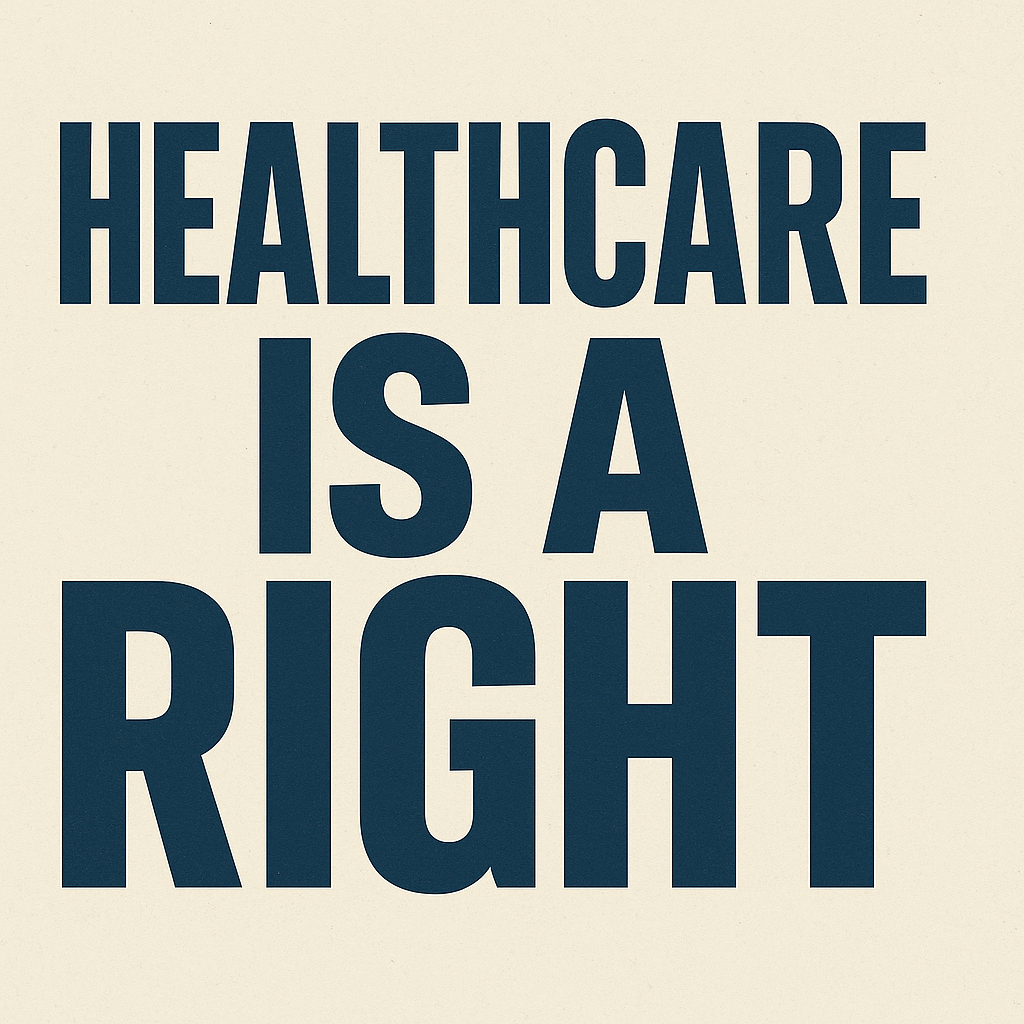
When elected officials forget that—when they tell us we are not "entitled" to something as essential as healthcare—they are not just wrong. They are betraying the very premise of our constitutional order.
A public official, whose salary, benefits, and government-funded healthcare are paid by you, told the same people footing the bill that they are not entitled to what he receives freely.
If we can afford healthcare for another nation, why are we told we`re not entitled to it ourselves? We are not asking for charity. We are demanding a return on our investment.
The 9th Amendment protects the rights that are not expressly written in the Constitution. It is our legal shield against dismissive governance that denies us healthcare, housing, or dignity.
When the people collectively decide that healthcare is a right, it becomes one. The government draws its legitimacy from our consent, and when that consent is withdrawn, the law must reflect that demand.
We hold the ultimate power. This country does not belong to lobbyists or pharmaceutical giants. It belongs to us, and we are coming to take it back.
If you’re reading this and you agree—then take action:
- Visit https://unitedforaccountability.org
- Submit your Declaration of Harm
- Join the campaign to enshrine healthcare as a protected right under the 9th Amendment
- Share this message with your community and let them know we are not waiting for permission
We are not just fighting for policy—we are fighting for principle. For dignity. For life. And that is something we are all entitled to.
Even if Rep. Flood was referring specifically to individuals who “refuse to work,” his entire premise is flawed, because it assumes that healthcare is a reward for economic productivity, not a fundamental human right.
🛡️ Rights are not contingent on labor.
The U.S. Constitution — especially the 9th Amendment — affirms that the people retain rights not enumerated in the document. That includes the right to health, to dignity, and to collective decisions about how we care for one another.
And if we the people collectively decide that healthcare is a right, then no elected official has the authority to override that will. In fact, to do so is to violate their oath of office and the foundational logic of representative democracy.
💡 Let’s break this down:
A healthy population is a free population.
Sick, indebted, or untreated people are not free. They're trapped in cycles of dependence, exploitation, and early death — while the wealthy benefit from systems that deny care to the many to enrich the few.
A prosperous nation is a healthy nation.
No thriving economy has ever been built on the backs of sick, uninsured citizens. Every child left untreated, every adult bankrupted by a hospital visit, is a failure of governance.
We are not asking — we are deciding.
The moment a majority of Americans decide they want universal healthcare, the conversation ends. The Constitution supports our ability to enact it — and any representative who opposes it is standing in the way of democracy, not defending it.
🔥 The deeper issue:
Flood’s comment is part of a broader ideological attack:
It attempts to frame public healthcare as a "handout," rather than what it truly is — an investment in national resilience, economic stability, and public liberty.
But let’s be honest:
We already fund healthcare — just not for ourselves. We fund it for Congress, for Israel, for corporate bailouts, for wars, and for private contractors who profit from public illness.
If America is truly the land of the free, then access to healthcare should not be determined by job status, income bracket, or ideology. It should be determined by our will — the will of the people.
“A nation cannot be free if its people are denied the right to be well.”
— Vincent Cordova
Community Comments
Community Comments
Share a public response to this post. Submissions are reviewed before they appear.
0 approved comments
Loading comments...