Private equity and profit before people
Who Is Holding the Tool
I said in The Tool Reflects the Nation that a tool does not decide its purpose. The person holding it does.
So we have to talk honestly about who is reaching for this tool first, and why.
It is private equity firms. It is institutional holders demanding higher returns every quarter. It is the owners and executives who believe a balance sheet matters more than the people it is supposed to serve.
Private equity is not built the way human life is built.
What a human being needs
Stability. Care. Time. Someone who stays.
What the model is built to do
Buy → load with debt → cut costs → extract cash → sell
usually within a few years
Its purpose is the return to the investor. Not the patient. Not the worker. Not the community.
That is not an insult. It is the model, and we already know what it does when it touches healthcare.
It has already been tested on human beings. Here are the results.
Hospitals
+25.4%
hospital-acquired conditions
A Harvard-led study in JAMA examined hospitals before and after private equity bought them. After acquisition, Medicare patients suffered a 25.4% increase in hospital-acquired conditions, the preventable harms hospitals are supposed to stop. Falls rose. Bloodstream infections from central lines rose. Surgical site infections doubled, even though these hospitals were performing fewer surgeries. The researchers pointed to reduced clinical staffing. (source)
Patient experience
↓
ratings and staff responsiveness
A second JAMA study, published in 2025, found that patients’ ratings of private equity–acquired hospitals declined after the buyout, including how responsive the staff were, and kept getting worse over time. (source)
Nursing homes
20,000+
estimated lives lost, 2005–2017
A National Bureau of Economic Research study found that private equity ownership of nursing homes increased the short-term death rate of Medicare patients by about 10%. Frontline staffing went down. Taxpayer spending per patient stay went up 11%. Interest payments rose by about 325%, and lease payments rose by 75%. The money was going somewhere. It was not going to the residents. (source)
Steward Health Care
$800M
taken out by Cerberus
In 2010, private equity firm Cerberus Capital Management bought a chain of nonprofit Catholic hospitals in Massachusetts and renamed it Steward. In 2016, Steward sold the land and buildings under its hospitals to a real estate trust for $1.25 billion and was left paying rent on hospitals it used to own. Cerberus walked away having made roughly $800 million. In May 2024, the whole system, by then 31 hospitals in eight states, collapsed into bankruptcy. Hospitals closed. Researchers documented more than 650 instances of deficient care across Steward hospitals. Cerberus denies wrongdoing. Patients and communities were left with the consequences. (source)
As of early 2024, at least 460 hospitals in this country were owned by private equity (source).
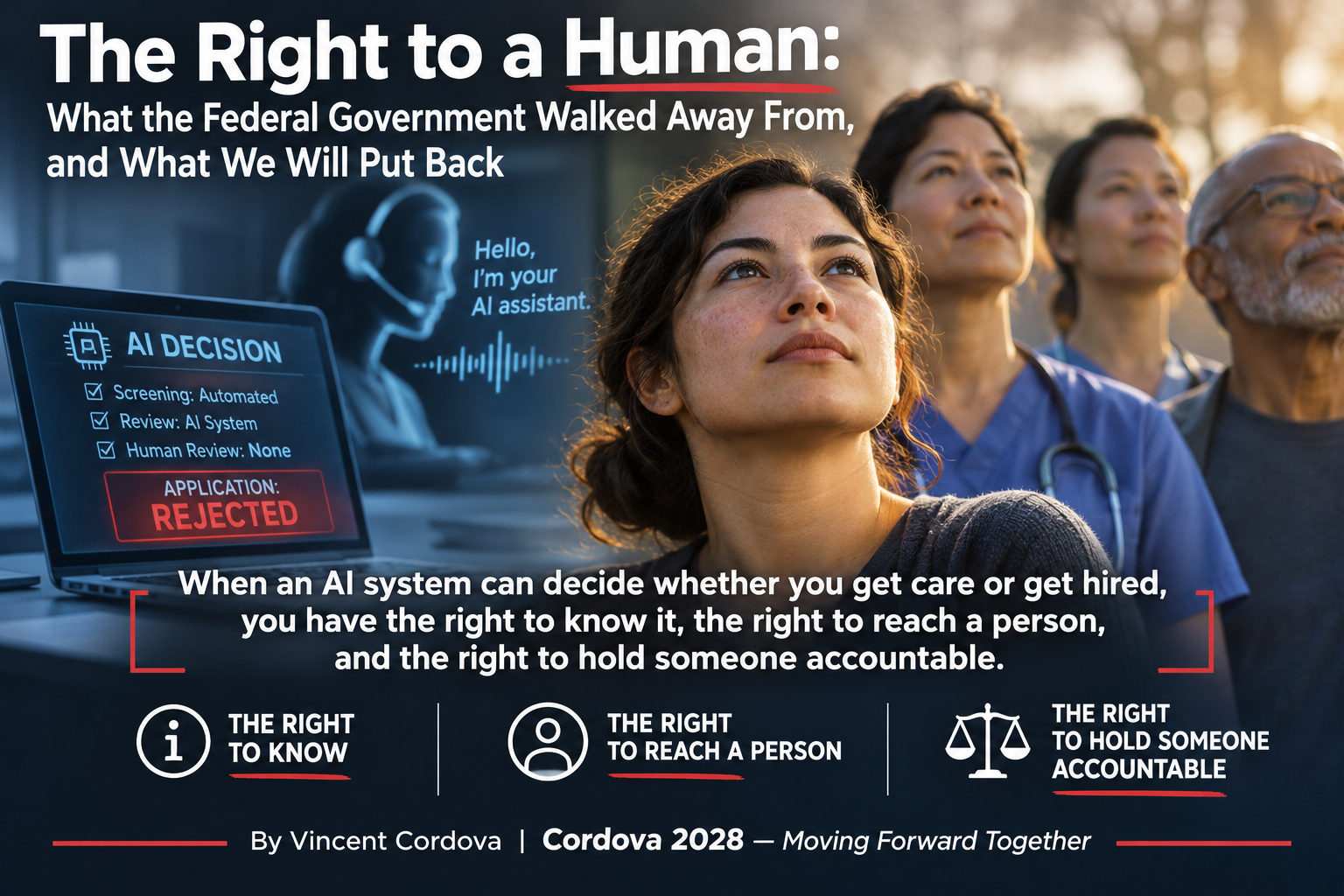
Now put artificial intelligence in those hands.
The private equity playbook already treats staff as the first cost to cut. AI gives it a faster, quieter way to do it. Replace the nurse who answers the phone. Replace the recruiter who meets the applicant. Replace the person who could have noticed that something was wrong. Then call it innovation.
In the hands of people who see humans as a cost, AI is not a tool for care. It is a tool for extraction at scale.
The industry will say it rescues struggling hospitals and nursing homes that would otherwise close. Sometimes capital does help. But the researchers behind these studies noted that most private equity buyouts target operations that are already successful (source), and the outcome data speaks for itself. And not every investor behaves the same way. That is exactly why we should judge them by results, in public, with the evidence on the table.
Here is what I need every person reading this to understand.
Not the debt they placed on the hospital. Not the real estate they sold out from under it. Not the quarterly return. You. Your work. Your care. Your life.
Every hospital, every company, every fund depends on human beings: the nurses, the patients, the workers, the families, the taxpayers. Without people, there is nothing to own and nothing to extract.
They need you to believe otherwise. They need you to believe you are a cost, a line item, a replaceable input. Because if you believe that, you will accept being treated that way.
That belief serves their essence, not yours.
I reject it. And I am asking you to reject it with me.