The process
What this review is, and what we are walking away from
The Universal Periodic Review is the one human rights process on Earth that covers every country, with no exceptions and no favorites.
The UN General Assembly created it in 2006 under Resolution 60/251. Reviews began in 2008. All 193 member states take a turn, roughly every four and a half years. A country files a report on its own record. Other countries ask questions and make recommendations. Civil society submits evidence. Nothing in it is binding. Nobody is sentenced. It is a conversation among peers, held in public.
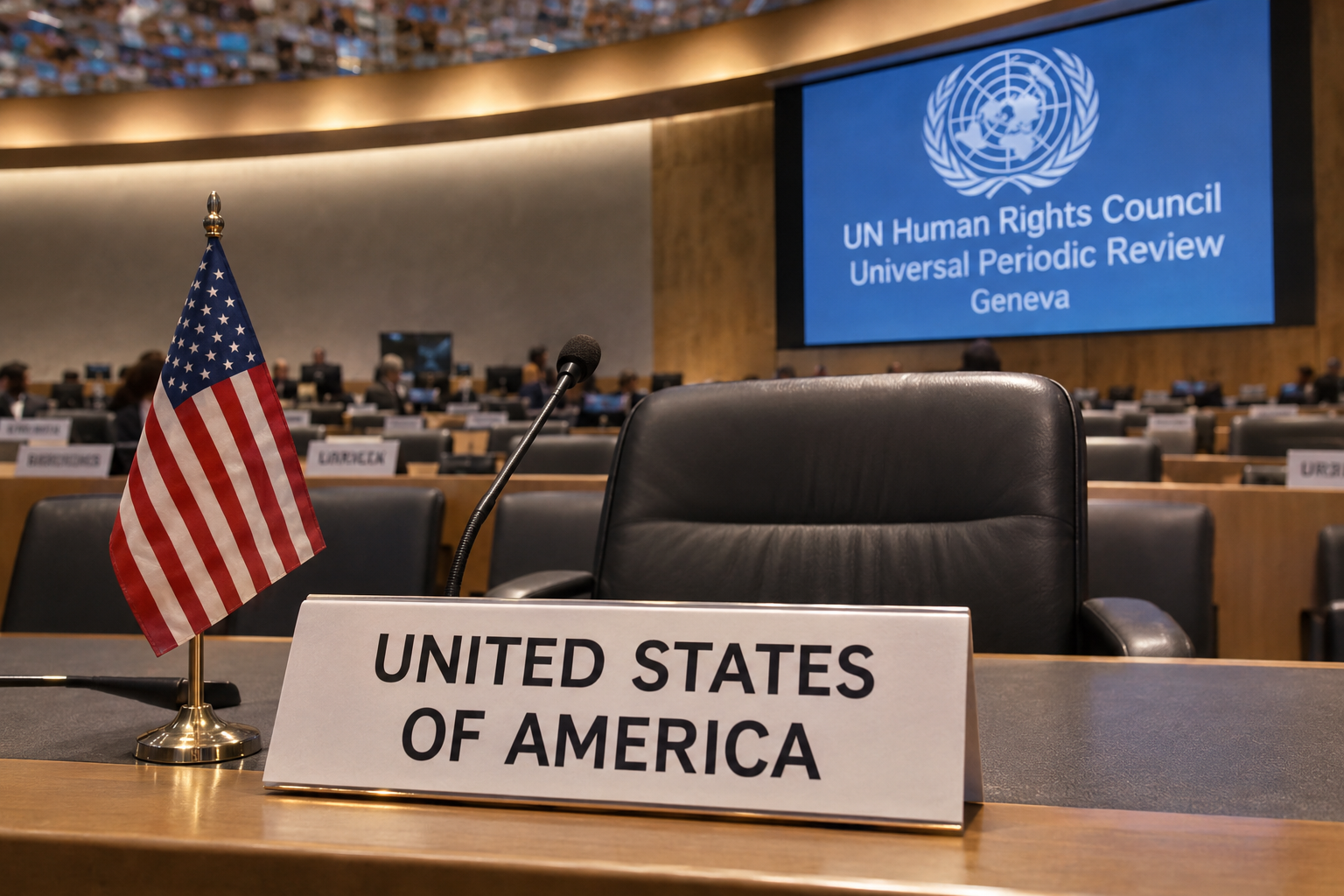
The United States sat for that conversation in 2010, in 2015, and in 2020. That third review happened under the first Trump administration, two years after it had already quit the Human Rights Council. The same president who showed up then refuses now.
So this is not tradition. It is not a long-held American position. It is a new choice, made by this administration, in this term.
Both parties own this
Showing up was never enough
Before we go further, the truth about the years we did show up. Both parties own this part.
After the 2020 review, Washington said it accepted over 80 percent of the recommendations it received (US pledge to the UN).
Accepting is not doing. In 2010 and again in 2015, the government agreed to “consider” ratifying the core treaties on women’s rights, children’s rights, disability rights and economic rights (HRW). It never ratified them. It promised to close Guantanamo. Guantanamo is open. By 2019 the ACLU reported that key promises made under the Obama administration were still largely unkept (ACLU).
So no, the chair being filled did not make us righteous. Democrats and Republicans both sat in it, nodded, and went home to do too little.
But they sat in it. They put the record on the table and let the world read it. That is the floor. This administration has gone beneath the floor.