Foreign Policy
Palestinian Land Rights, Humanitarian Aid, and Accountability Cannot Be Optional
Vincent Cordova argues that restoring Palestinian land rights, returning humanitarian aid, and imposing real consequences on the Israeli government are basic requirements of any serious human-rights policy.
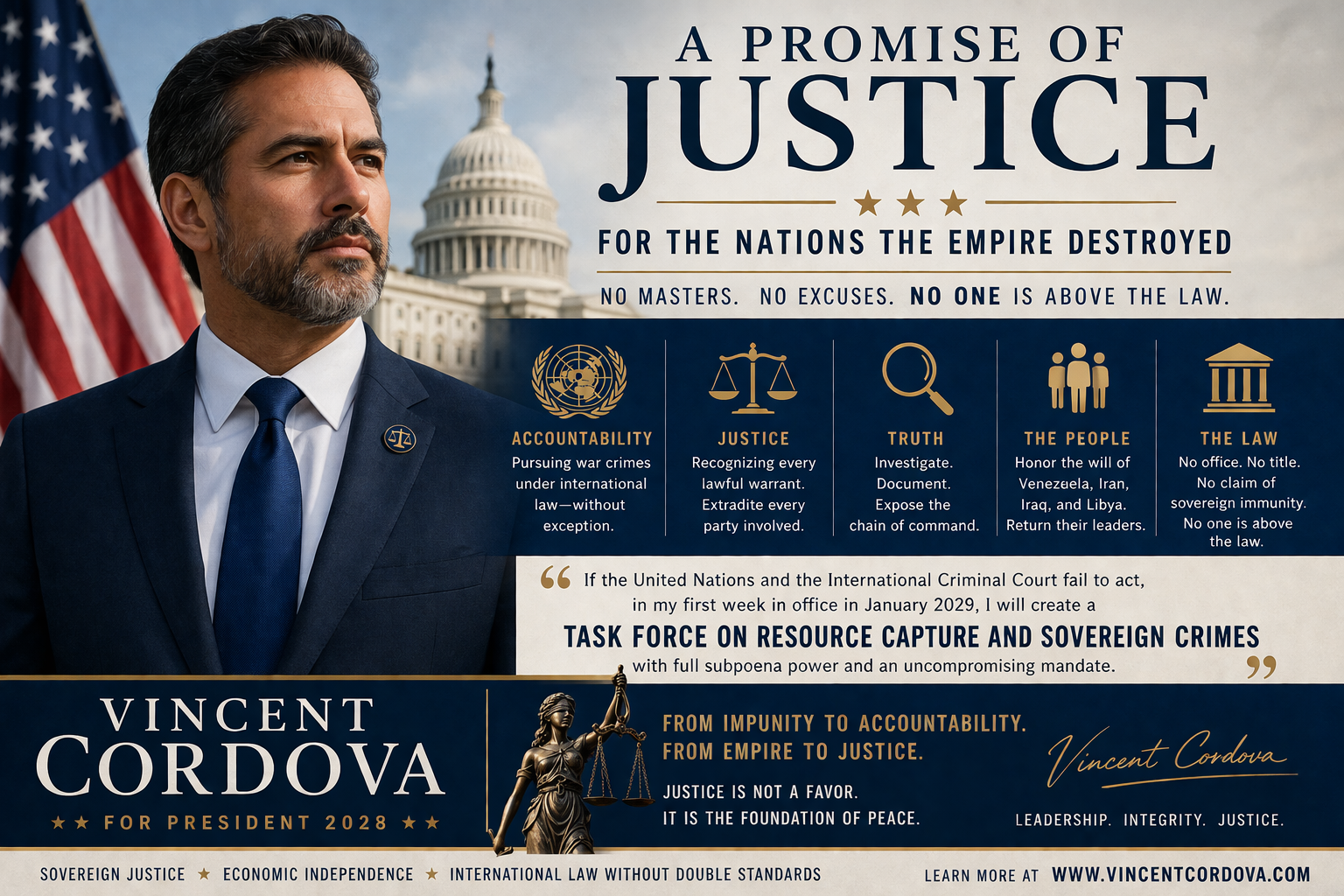
There is nothing serious about a foreign policy that speaks about peace while allowing dispossession, siege, and starvation to continue. If we are going to talk about human rights at all, then Palestinian land rights, the full return of humanitarian aid, and real accountability for ongoing abuses cannot be treated as optional.
This is not a question of abstract sympathy. It is a question of whether the Palestinian people are recognized as human beings with the right to remain on their land, live in safety, and exist without being slowly erased by military force, blockade, or diplomatic indifference.
Palestinian land rights are not a rhetorical flourish. They are the core of the issue. A people cannot be pushed off their land, enclosed, displaced, and fragmented for generations and then told that dignity will be restored later through statements, symbolism, or managed humanitarian scraps.
That is why our campaign has added a clear commitment to work toward restoring Palestinian land rights. Justice is not only about reducing the temperature of the violence. It is about ending the conditions that keep reproducing it.
Humanitarian aid must also be restored in full. Food, medicine, fuel, water infrastructure, and emergency relief are not bargaining chips. They are not favors to be granted to civilians when convenient. They are the minimum conditions required for human survival.
Any government that obstructs or destroys that lifeline should face consequences. That is why we are calling for an embargo on the Israeli government until international law and basic human-rights standards are upheld. Consequences are what distinguish a real policy from a public relations exercise.
This is not hostility toward ordinary Israeli people. It is a refusal to keep protecting a government from accountability while Palestinian families bear the cost in displacement, injury, hunger, and death. A just standard must be applied to allies as well as adversaries or it is not a just standard at all.
The United States has spent years proving that diplomatic language without enforcement changes nothing. Condemnations without material pressure do not stop dispossession. Expressions of concern do not reopen aid corridors. Empty appeals to restraint do not return stolen land or interrupted childhoods.
A serious policy requires international coordination. The goal is not symbolic outrage for one news cycle. The goal is to build global pressure strong enough to force a change in conduct, restore aid access, and make clear that collective punishment will not be subsidized indefinitely.
That means working with other governments, humanitarian institutions, legal bodies, and civil society networks that are prepared to defend international law in practice, not just in speeches. If the law means anything, it must apply when the victims are Palestinian too.
Our World Goals page now says clearly that we will work with the international community to restore Palestinian land rights, pursue an embargo on the Israeli government, and ensure the full return of humanitarian aid. This article is here to make plain that this is not decorative language. It is a campaign commitment.
The standard is simple. No government should be allowed to dispossess a people, choke off aid, and expect permanent diplomatic protection from consequences. Palestinian life is not disposable. Palestinian land rights are not negotiable. And humanitarian survival must never be treated as leverage.